Loading...
Serving Walnut Creek, CA and surrounding areas. (925) 532-0252
If your vehicle was towed by law enforcement in Walnut Creek, one call tells you where it is, what to bring, and how to get it back - so you stop the storage fees from piling up and drive home today.
Police towing in Walnut Creek means a law-enforcement agency ordered your vehicle removed - from a city street, a parking area, or a highway like I-680 or SR-24 - using a tow company from the agency's approved rotation list, and your vehicle is now at a licensed storage facility where fees are accumulating by the day.
The first thing to understand is that you are not out of options. California has specific rules protecting people in this situation: regulated storage rates, required owner notification, and the right to contest a tow you believe was improper. Acting the same day you learn about the tow is the most effective way to limit costs - every day the vehicle sits adds to the total you owe at release.
If you are also dealing with damage from the incident that led to the tow, our accident recovery team handles those situations separately. For vehicles being held at a storage facility after a police tow, the process described here is your starting point.
If you return to your parking spot and the vehicle is not there, call the Walnut Creek Police Department non-emergency line before assuming theft. They can tell you immediately whether a tow was ordered and which facility has it. This one call rules out theft and points you to the retrieval process.
California law requires the storage facility to notify the registered owner after a non-consensual tow. If you got a letter or phone call from a storage yard, the clock is already running on fees and - eventually - on the lien process. The notice should include the facility's contact information and what you need to do next.
Breakdowns and collisions on these corridors in Walnut Creek regularly result in California Highway Patrol-ordered tows to clear the roadway. If your vehicle was disabled on a state highway, the CHP dispatcher can tell you which company responded and where your car went - that call comes before anything else.
Active parking enforcement in Walnut Creek's downtown areas means street-cleaning violations, permit-parking zones, and no-parking areas near the city center are regular sources of police-ordered tows. The retrieval process is the same as any other non-consensual tow under California rules.
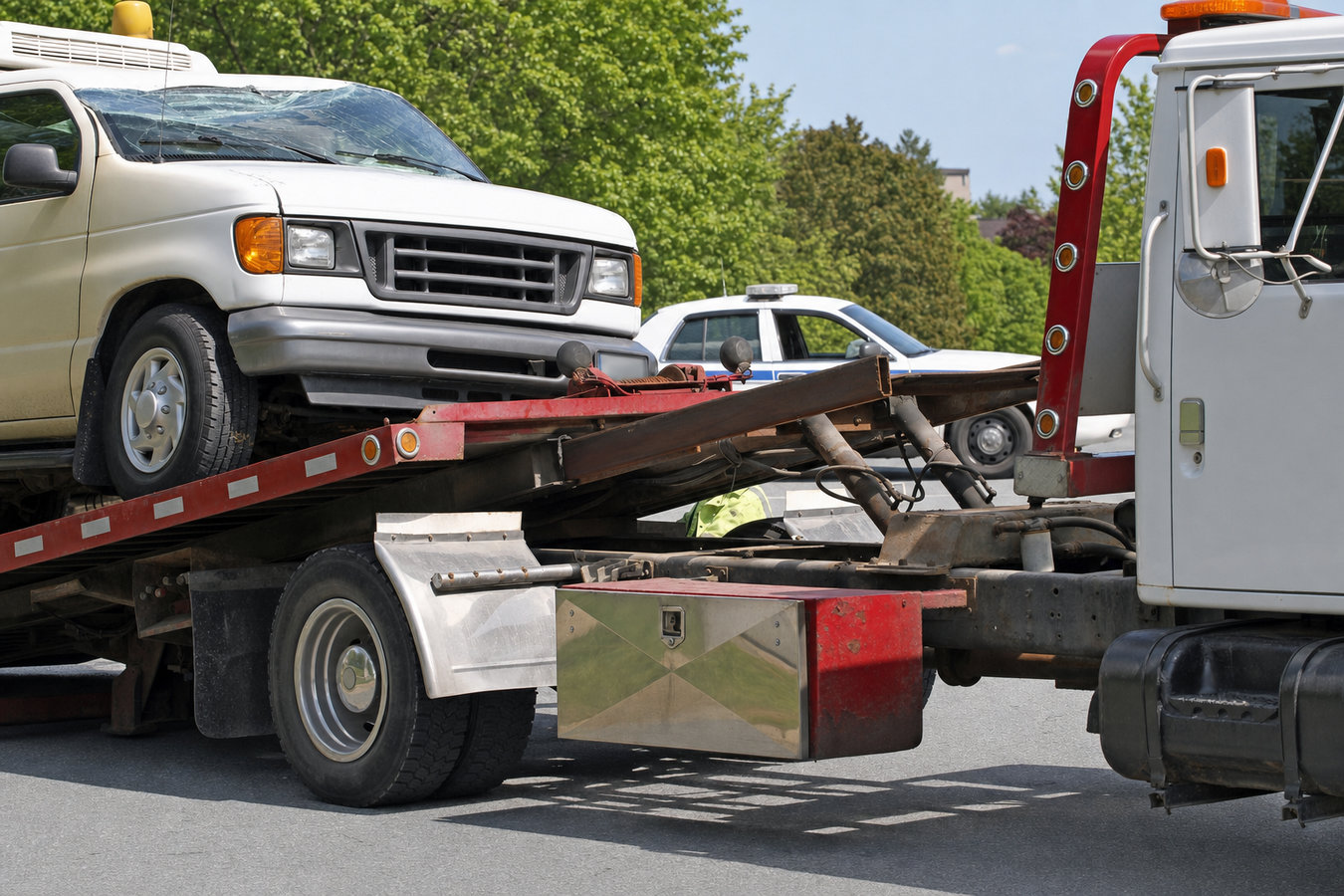
When law enforcement calls us to a scene on I-680, SR-24, or a city street, we respond with the right equipment for the vehicle being towed - flatbed for cars and trucks that need all four wheels off the ground, wheel-lift for situations where that method is appropriate. Every vehicle is handled using proper technique regardless of traffic pressure or time of day. We follow California's required notification process after the vehicle arrives at the storage yard, and we post the rate schedule the law requires.
After a police tow, the situation often connects to other needs. If your vehicle was in a collision, our accident recovery team handles scene clearance and vehicle recovery. If the vehicle ends up in storage for an extended period while you resolve a hold or other issue, our vehicle storage facility keeps it secure until you are ready to retrieve it.
For vehicles disabled or involved in incidents on I-680 and SR-24 - ordered by the CHP to clear travel lanes, handled with equipment appropriate for highway conditions.
For vehicles towed at the direction of the Walnut Creek Police Department from city streets, parking zones, or areas with active enforcement - same California rules, same retrieval process.
When a collision or law-enforcement investigation requires a vehicle to be removed from the scene and held pending authorization for release - coordinated with the requesting agency.
Once the agency authorizes release and you have the required documents, the retrieval process is straightforward - itemized billing at the gate and a walk-around before you drive off the lot.
Walnut Creek sits at the interchange where I-680 and SR-24 meet - one of the busiest junctions in Contra Costa County. High traffic volumes on these corridors mean vehicle breakdowns, collisions, and stalled cars are a regular occurrence. Law enforcement frequently calls for tows to clear lanes and keep traffic moving through this critical East Bay junction. During peak commute hours, incidents on I-680 can back up traffic well into the surrounding surface streets, which is why the CHP prioritizes rapid clearance and why tow companies on the rotation list must be ready to respond quickly.
Beyond the highways, Walnut Creek's downtown core and surrounding neighborhoods have active parking enforcement. Customers in Pleasant Hill and Concord face similar situations and are within our service area. For a full explanation of California's non-consensual tow laws and your rights as a vehicle owner, the California Highway Patrol publishes information on rate schedules and the post-storage hearing process.
Call the Walnut Creek Police Department non-emergency line (for city streets) or CHP dispatch (for I-680 and SR-24). Have your license plate number ready. They will tell you which tow company responded and which storage facility has your vehicle - this is your starting point before anything else.
Call the storage facility before you go. Ask for the total charges so far, confirm the documents required (photo ID, proof of ownership, proof of insurance), and ask whether a law-enforcement release authorization is needed. Arriving prepared means one trip, not two.
If the agency that ordered the tow has placed a hold on the vehicle, contact that agency directly - not just the storage facility. Paying storage fees alone will not lift the hold. Get documented clearance from the agency before you make the trip to the lot. Starting this immediately limits additional charges.
At the facility, present your documents, review the itemized receipt before you pay, and walk around the vehicle before driving off. If you notice new damage, document it on the spot and raise it with the facility manager before leaving. Keep your copy of the paperwork.
Call now - we can help you find where your vehicle is and tell you exactly what to bring so you get it back in one trip.
(925) 532-0252To respond to police-ordered tows in Walnut Creek and on I-680 and SR-24, a company must be vetted and approved by the requesting agency. Being on that list means we have already met the agency's requirements for equipment, insurance, and conduct - not just the state minimum.
California law requires storage facilities handling non-consensual tows to post their rate schedule and provide an itemized receipt at release. We follow this requirement without being asked, and we can explain every line on your bill if anything looks unclear - because you have a right to understand what you are paying.
A tow on a busy freeway happens fast and alongside moving traffic, but that does not justify a careless hookup. We use the right equipment for each vehicle type - flatbed or wheel-lift - and follow safe loading procedures every time. The Towing and Recovery Association of America sets professional standards our operators are trained to meet.
Having your vehicle towed without warning is stressful. You do not need jargon or a runaround - you need to know where your car is, what it will cost, and what to do next. We give you plain answers to those three questions on the first call, so you can move forward without guessing.
A police tow company that cuts corners on equipment, skips itemized billing, or ignores California's notification rules creates problems for the people it is supposed to serve. We run a process that is transparent at every step - because drivers in Walnut Creek have enough to deal with when their vehicle gets towed.
If your vehicle needs to stay off the road for an extended period after a police tow or hold, our storage facility keeps it secure until you are ready.
Learn MoreWhen a collision on I-680 or a city street leads to a police tow, our accident recovery team handles scene clearance and vehicle recovery.
Learn MoreEvery day your vehicle sits in storage costs more - one call tells you where it is, what to bring, and gets the retrieval process moving right away.