Loading...
Serving Walnut Creek, CA and surrounding areas. (925) 532-0252
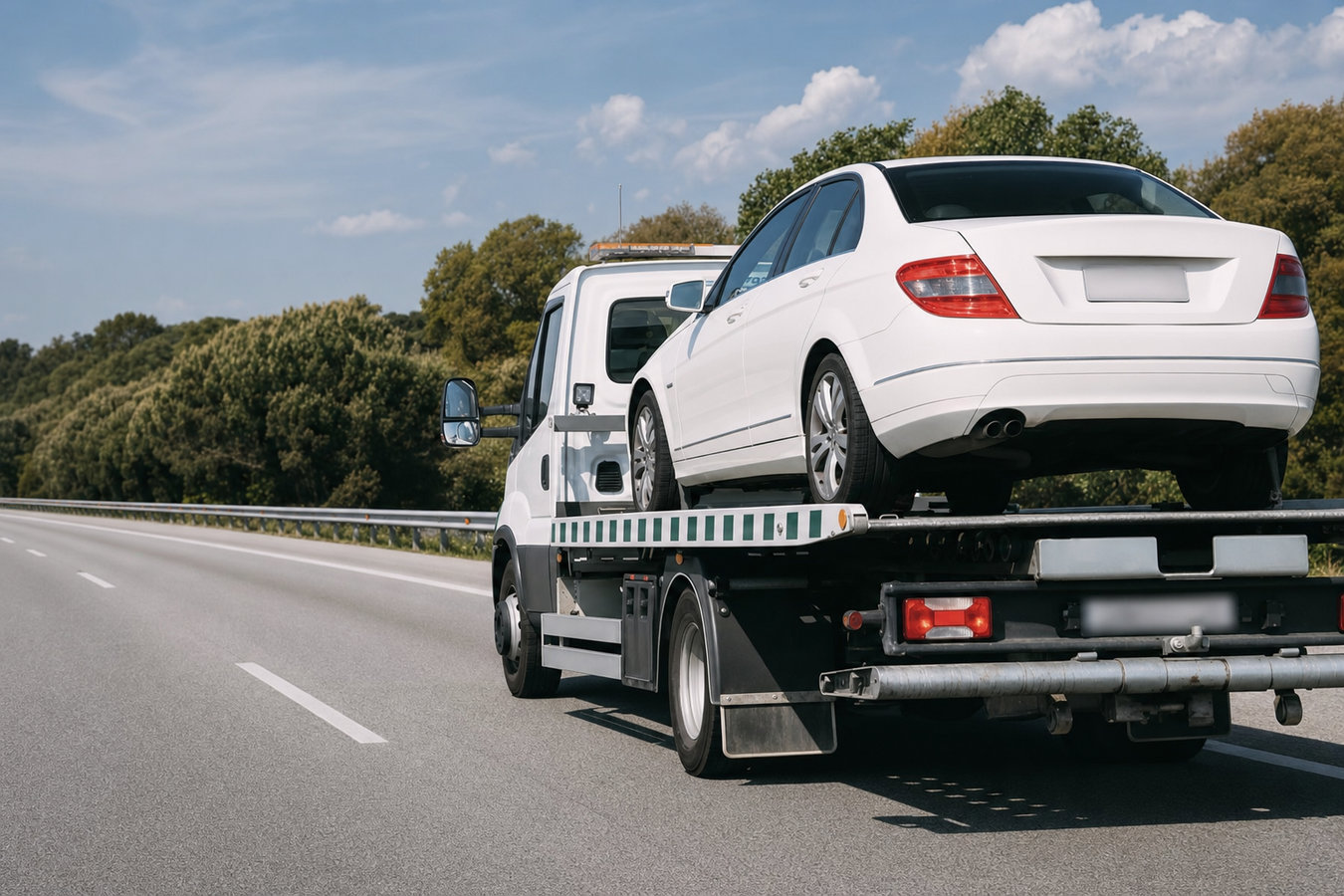
AWD vehicles, lowered cars, and collision-damaged trucks need a flatbed - not a wheel-lift. We carry your vehicle on a level deck from Walnut Creek to wherever it needs to go.
Flatbed towing in Walnut Creek means your vehicle rides on a flat, level platform with all four wheels off the road - the deck tilts down to load your car, it is strapped securely, and it stays elevated the entire trip to your repair shop or destination, with no rolling, dragging, or drivetrain stress in transit.
When you drive an all-wheel-drive vehicle, a lowered car, or anything with front-end or suspension damage, a standard wheel-lift tow that rolls two tires on the ground can cause real harm. Flatbed towing is the safe choice in those situations. It is also the preferred method for any vehicle that cannot roll at all. If you are not sure which type you need, the dispatcher will ask the right questions before sending a truck.
Walnut Creek drivers on I-680 or SR-24 often need a fast, professional pickup. If your situation also calls for around-the-clock availability, our 24 hour towing service runs every day including weekends and holidays - a dispatcher always picks up, any time you call.
AWD systems are not built to have one axle stationary while the other rolls. A wheel-lift tow - which leaves two tires on the road - can damage the drivetrain before you even reach the shop. A flatbed lifts all four wheels clear of the pavement and protects the drivetrain completely.
After a collision on I-680, SR-24, or anywhere in the Walnut Creek area, damage to the steering, suspension, or wheels may make it unsafe to roll the vehicle at all. A flatbed carries your car without putting any load on the damaged parts, which matters for your safety and for your insurance claim.
Lowered cars and vehicles with modified or aftermarket suspension often have too little ground clearance to safely accept a standard tow hook. A wheel-lift on the wrong car can scrape the front air dam or undercarriage badly. A flatbed operator uses a tilting deck to load the vehicle without forcing anything underneath.
A breakdown on the I-680 corridor or on the SR-24 approach to the Caldecott Tunnel leaves you on a narrow shoulder with fast-moving traffic. A flatbed can load your vehicle quickly and get both of you out of the danger zone. The longer you sit on a freeway shoulder, the greater the risk.
Every flatbed tow starts with a quick assessment - the driver looks at your vehicle, confirms whether it needs to be driven or winched onto the deck, and chooses the right loading method before touching anything. For vehicles that need heavy equipment response, our heavy equipment and machinery towing team handles oversized loads that go beyond what a standard flatbed can carry. Whatever size or situation you are dealing with, the goal is the same: your vehicle arrives at its destination in the same condition it left the scene.
If you need overnight or around-the-clock flatbed coverage, our 24 hour towing service means a dispatcher is available every hour, every day, including holidays. A flatbed truck is the standard for passenger vehicles, luxury cars, EVs, and any vehicle that cannot safely roll on its own wheels during transport.
Suitable for most passenger cars, crossovers, and light trucks - your vehicle rides on the deck with all four wheels off the road for the entire trip.
For vehicles that cannot move under their own power - the deck tilts down, a winch pulls the car up carefully, and it is strapped before the truck moves.
All-wheel-drive cars and electric vehicles require a flatbed to prevent drivetrain damage - the right method from the moment the driver arrives.
For vehicles that need to travel farther than a local shop - to a dealership, a specialty repair facility, or a destination outside the immediate Walnut Creek area.
Walnut Creek sits at the junction of I-680 and State Route 24, and both corridors see heavy commuter traffic throughout the day. A breakdown on the narrow freeway shoulder, on the grades approaching the Caldecott Tunnel, or in the multi-level parking structures near Broadway Plaza each presents a different challenge for a flatbed driver. Knowing how to maneuver a full-length deck in a tight parking garage, or how to position safely on a steep grade while traffic moves at speed, is something a driver learns from experience on these specific roads - not from GPS alone.
The Walnut Creek area also has hillside neighborhoods where winding residential roads and limited turnaround space require a driver to plan the approach before committing to it. Customers coming from Lafayette or heading south toward Danville face similar terrain on the I-680 corridor. Local knowledge shortens response time and reduces the risk of a loading mistake in a difficult spot.
The dispatcher asks for your exact location - a cross street, a highway exit number, or a nearby landmark - along with your vehicle's year, make, and model. Mention if it is AWD or has low clearance so the right truck is dispatched. You will receive an estimated arrival window and a confirmation of the destination address.
Turn on your hazard lights and, if you are on I-680 or SR-24, stay in your vehicle with your seatbelt fastened if the shoulder is narrow. If you exit the car, move well away from traffic. Caltrans incident management may also patrol the freeway and can help keep the scene safe until the truck arrives.
When the driver arrives, they walk around your vehicle before touching it - checking tires, damage, and the best loading approach. The deck tilts to road level and your vehicle is either driven up or carefully winched onto the platform. Nothing is rushed. The driver confirms the price before loading.
Your vehicle is strapped at four or more anchor points, the driver confirms your drop-off address, and transport begins. At the destination the deck tilts back down and your car is unloaded carefully. You receive an itemized receipt. Walk around your vehicle and note its condition before the driver leaves.
We dispatch flatbed trucks on I-680 and SR-24 around the clock. Call us and a driver heads your way - no voicemail, no callback queue.
(925) 532-0252We default to a flatbed for AWD cars, EVs, luxury vehicles, and anything with low clearance or front-end damage - not only when a customer specifically asks. That default protects your drivetrain and undercarriage from the moment the driver arrives.
Our drivers work the Walnut Creek freeway corridors regularly, including the Caldecott Tunnel approach and the tight commercial lots near Broadway Plaza. Knowing these roads means faster routing and safer positioning when every minute on a freeway shoulder counts.
California towing regulations require transparent pricing, and we follow them - giving you a written estimate before the truck moves your vehicle. What you are quoted is what you pay. No add-ons after the job is done. California towing pricing rules are enforced statewide.
Certified operators use the correct number of straps at the manufacturer-specified anchor points for your vehicle - not wherever is convenient. Proper securement prevents shifting during transport and avoids the body damage that a rushed hookup can cause.
When a company treats flatbed towing as a specialty - not just a backup when the wheel-lift does not fit - every part of the job is handled more carefully. That is the difference between a vehicle that arrives at the shop exactly as it left the scene, and one that arrives with new problems.
Round-the-clock dispatch for breakdowns and accidents at any hour - weekends and holidays included.
Learn MoreSpecialized transport for oversized loads and heavy machinery that exceeds standard flatbed capacity.
Learn MoreCall now and a dispatcher will pick up immediately - our flatbed trucks cover I-680 and SR-24 around the clock, so do not wait on a dangerous shoulder.